
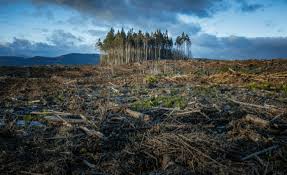
The Congo Basin contains the second largest tropical rainforest on Earth. Across roughly 3.7 million square kilometres spanning the Democratic Republic of Congo, Republic of Congo, Cameroon, Gabon, Central African Republic, and Equatorial Guinea, this forest has been absorbing carbon dioxide and releasing oxygen for millennia. It processes an estimated 1.1 billion tons of CO2 annually. Without it, the already precarious global effort to keep warming below two degrees Celsius becomes arithmetically impossible. Climate scientists who model the consequences of Congo Basin deforestation come back with numbers that suggest we are not, in fact, talking about a regional environmental issue. We are talking about a global life-support system.
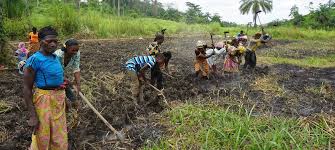
And yet the communities who have lived inside this forest for centuries , the Baka, Aka, Twa, and dozens of other peoples collectively and inadequately grouped under the term “forest peoples” or “Pygmy peoples” in the literature , have among the least secure land rights on the continent. They are, with stunning regularity, expelled from their traditional territories in the name of conservation. The same forest that scientists and NGOs and carbon markets are urgently trying to protect is being cleared for exactly the actors who benefit from the carbon economy: industrial logging concessions, palm oil plantations, and large-scale agricultural projects, many of them funded by the same Western financial institutions and development banks that simultaneously issue climate pledges.
This is a structure. And it is worth being specific about how it operates.
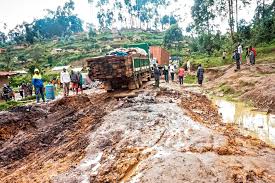
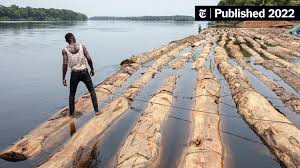
The DRC holds more than sixty percent of the Congo Basin forest. It also has some of the highest rates of tropical deforestation in the world, with recent satellite data from Global Forest Watch showing accelerating tree cover loss particularly in the provinces of Sankuru, Maniema, and Équateur. The drivers of this deforestation are, in descending order of impact: smallholder agriculture by communities clearing land for subsistence survival (itself driven by population growth, poverty, and the absence of alternative livelihoods), artisanal charcoal production that supplies the cooking fuel needs of rapidly growing cities like Kinshasa and Kisangani, commercial logging , some legal, some not , and, increasingly, large-scale land acquisitions for agribusiness.
The dominant global response to this has been to develop forest carbon markets , mechanisms through which wealthy-country corporations purchase “carbon credits” representing forest that the DRC government or local project developers agree to protect. On paper, this is an elegant solution: money flows from high-emitting economies to the communities that guard the forest, creating an economic incentive to preserve rather than clear. In practice, the market has been riddled with fraud, inflated credit valuations, and the systematic exclusion of the very communities whose labor and ecological knowledge actually protect the forest.
A 2023 investigation by The Guardian, Zeit, and SourceMaterial found that a significant proportion of carbon credits sold through one of the world’s largest voluntary carbon market standards were largely worthless , representing forest that was never under serious threat of clearing in the first place, meaning no actual emissions reduction was being purchased. Companies including Shell, EasyJet, and others had used these credits to claim “carbon neutrality” for operations that continued emitting. The DRC communities whose forests were enrolled in these projects saw only a fraction of the revenue, often received in forms (in-kind agricultural inputs, community development projects managed by outside NGOs) that gave them little real economic sovereignty.
Meanwhile, Indigenous forest peoples in the basin face active dispossession. There are communities in the Salonga National Park , Africa’s largest tropical national park , who have been living inside its boundaries for longer than the park has existed, who have maintained the forest through practices of rotational use and spiritual prohibition that outsiders call “traditional ecological knowledge” in academic papers but then fail to protect through any enforceable legal instrument. These communities have been subjected to what conservation researchers call “fortress conservation” , the model of creating protected areas by removing human populations, as if the forest exists despite its human inhabitants rather than, in significant part, because of them.
The Baka people of Cameroon have been documenting their own displacement by conservation organizations and logging companies with the support of Forest Peoples Programme. Their testimonies describe rangers from national parks conducting raids on their forest camps, burning dwellings, confiscating tools, and arresting community members for “encroachment” on land their ancestors cleared and managed for generations. Conservation organizations including some with extraordinarily high profiles in Europe and North America have been implicated in funding or turning a blind eye to these abuses. The people being expelled are not poachers. They are the forest’s longest-term stewards.
This is the moral centre of what is increasingly called “carbon colonialism” , the arrangement by which the atmospheric emissions of wealthy nations are offset by the dispossession of African communities, so that the economic structures that produced the climate crisis in the first place can continue operating while claiming green credentials. The forest is being saved for the carbon markets. The people of the forest are the cost.
The creative response to this in Central Africa has been fierce and inventive. Congolese artists have been processing their country’s ecological and political reality through work that refuses the sentimentality Western audiences often bring to African landscape. The painter Chéri Samba, whose large-format canvases have populated this territory since the 1970s, makes paintings that crowd the frame with social complexity , text, figures, irony, and beauty coexisting in ways that resist the neat narratives of outside observers. Younger Congolese artists working in photography, installation, and digital media are engaging with the forest explicitly: what it means to be from a country the world needs to preserve but refuses to compensate fairly, what it means to have your land described as a “global commons” in ways that strip the people who live there of ownership, what it means to love a landscape that is being stripped.
The musician Baloji, born in Lubumbashi, makes music that sits between electronic production and the rhythmic structures of Central African popular music, and his work is saturated with what it feels like to hold a complicated inheritance , colonial history, mineral extraction, diaspora, beauty, rage. When artists in the Congo Basin make work about the forest, they are doing something that no carbon market can replicate: they are affirming that the forest is a place of meaning, not just a reservoir of ecosystem services. They are saying that the communities inside it have a claim on the world’s attention and its resources that goes beyond their utility as stewards of other people’s oxygen.
The international community’s obligations here are specific. Fair and direct payments to forest-dwelling communities for the ecosystem services they provide , not laundered through national governments with weak accountability mechanisms and weaker commitments to Indigenous rights. Free, prior, and informed consent as a non-negotiable condition of any conservation project that affects traditional territories. Enforcement mechanisms for the rights frameworks that already exist: the UN Declaration on the Rights of Indigenous Peoples, the ILO Convention 169, the African Charter on Human and Peoples’ Rights. These are not radical demands. They are the baseline that wealthy-world governments have already agreed to in principle and routinely fail to honour in practice.
The Congo Basin forest will survive if the people who have always protected it are given the security, the resources, and the autonomy to continue doing so. It will not survive if the model of expulsion-and-carbon-credit-sales is allowed to continue. The world needs this forest more than it has ever admitted. It is past time for the world to pay for it honestly.